The House on Mango Street

As I was reading A House on Mango Street by Sandra Cisneros, I honestly felt like it was just a total reflection of my life. I could relate to everything she wrote and described in that book. Every single word and chapter she wrote, I could picture it in my head. She made me reminisce of my childhood. When I was little my parents would always play the lottery and will always tell me “don’t worry Mija (daughter) today we are going to win the millions, and we are going buy this big house, and you are going to have your room, and your mom is going to have her kitchen to cook on.” You see, my mom loves to cook her traditional Mexican food, and my dad always wanted to give her dad. So, when she talked about her house that came up to my head.

Another thing that came up to my head was the way that she said that she would wake up to her dad’s music in the morning. That was always my dad every weekend. I knew that we had to be up by 8 am if not, my dad’s music will still wake me up. The way described her neighborhood sounds just like the one I live on right now and my almost my whole life. This neighborhood seriously gives me life, and I wouldn’t change it for anything.

The stories that she used made me think about my whole life: the right things and the bad stuff. Sandra Cisnero did a great job portraying the lives of the Latino community and the minorities in general. Since I was little, my parents would always have family gatherings, and there would come this time it was still around midnight where all the grownups would start speaking about their life in America and how their life had changed. They would pour their heart out on how they left everything they had behind in their home country to come here to chase an American dream that wasn’t reachable. And how instead of having more here, they felt they had less because of how they treat them and live.

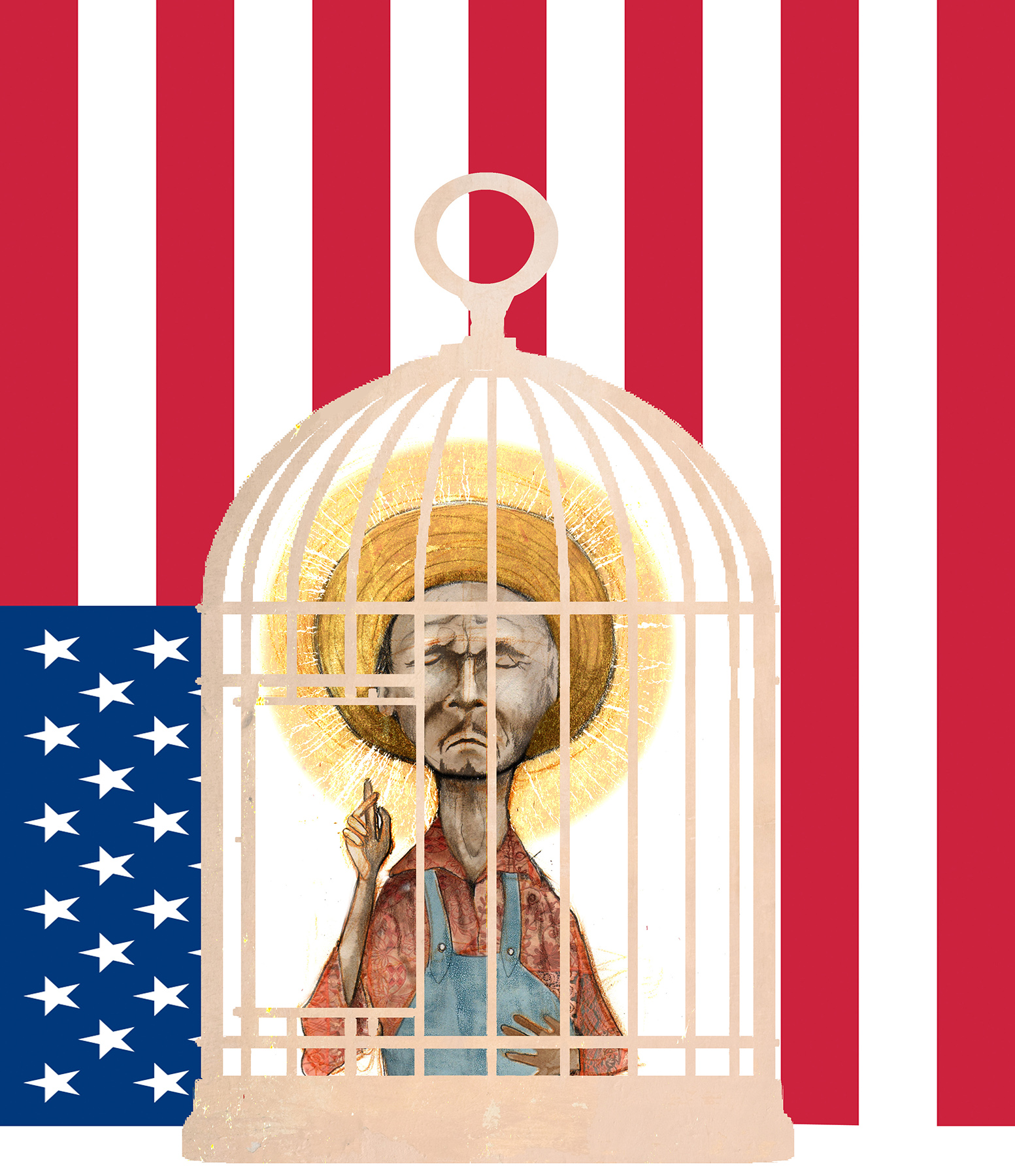
My mom once said that living in America was like living in a gold cage where you were trapped. She said that here in this country you can food, money, a beautiful house and everything you ever wished for but in exchange for something. She said that for us minorities, especially for the immigrants, we had to give up so much. First, we had to give up the chance of ever returning home to their loved ones because if she left, she wouldn’t be able to come back. Second, we would have to put our dignity aside. She said their would-be people who would try to strip us from our pride. They would look at us as we were aliens from another country, they would call us names, and they would treat us so differently until we gave up. Third and finally, they would mistreat us and would try to keep us at the bottom. I honestly think that Sandra  Cisneros’ book A House on Mango Street gave us a glimpse of what my mom described as the golden cage.  
Dream

 After reading the poems of Langston Hughes, Sherman Alexie, and Jimmy Santiago Baca, the only two words that kept popping in my head was lies and dream. Interestingly enough, each author has a different ethnicity, but at the same time, they all are minorities in this country. Every one of them describes with such sorrow how has this country has failed them by lying to not only them but everyone and robbing them from their dreams. Even though they all write in different styles, some of the words they use to describe the way they live or feel interlock each other. I notice that the poems talk about dreams, and they use the word “blood.” In Langston Hughes’s poem, he states, “Whose sweat and blood,” and Sherman Alexie says, “Our flag will be a white sheet stained with blood.”  For me, both these authors use these words to show how  America has shed so much innocent blood.

A word that I repeatedly saw through these poems is the word dream. I think that the phrase dream correlates with the way the authors felt lied too. I believe that every author felt that they were being lied to because they were being promised something unreachable.  For Hughes, it was the dream of being free and one day being able to be on the same level as the rest. To Baca, it was the longs of the “American Dream” the money and the houses.  On the other hand, Sherman is how Americans have lied to generations of what Christopher Columbus was and what he did.

From all these poems, the poem that I saw my self the most was the one of Langston Hughes Let American Be American Again. This poem speaks to everyone, not mattering their skin color or background. The way he describes the lives of the minorities and the things they go through it is mesmerizing.  A line that stood out to me the most was, “Let America be the dream the dreamers dreamed.” This line, to me, is personal because I have brothers and sisters who are dreamers. These mean that they are DACA recipients.  Daca receipts are “young people who have grown up as Americans, identify themselves as Americans, and many speak only English and have no memory of or connection with the country where they were born.” And like Hughes says, they are people who want to want to accomplish their dreams.

Identity

During the summer I would usually go outside and sit on my rocking chair that is on my porch. I would have right next to me a cold cup of lemonade and some cucumbers with lemon and hot sauce. I would just sit there and wait for the sunset. Every time I sat there and waited for what seemed an hour I would always just observe everyone that passed by. I would notice that the people that passed were all from different backgrounds. They were White, African American, Hispanic, Asian and even Indian. They all passed by in little groups and talked in my different languages. It was something truly beautiful to witness because for me this neighborhood represented America. It represented how diverse America is and how the world comes together in one place for one reason: to live the American dream. But what I loved the most was that every single person that past by didn’t loose their identity. By what I mean by this is that they didn’t loose their parents culture or who they are. They didn’t assimilate to the American culture but rather in a way balanced it. Something that is really hard to do in the 21st century especially in American.

I come from immigrant parents who both left everything behind in Mexico to provide my siblings and myself a better life. My mom stopped studying when she was in 3rd grade and my father until 5th grade. They both have spend their whole life working hard labor. All they knew was that they wanted their children to have a better future so here I am on my second year at Kean. But something they made sure of was that my siblings and I didn’t forget who we were or where we come from. So from early age they told us you are American but your also Mexican. They told me that it was important for me to learn how to read, write, and understand English but I also had to read, write and understand Spanish. So she told me you can learn English in school but once your in my house you can only speak Spanish. Thanks to her know I am proficient in two languages. Something very useful today. My mom also taught how to cook Spanish dishes, traditions, as well as our holidays. I taught her how to speak English, the food we eat here, and the holidays. We both kinda balanced both cultures.

I think as a person who is Chicana or Latina it is crucial for the new generation to be proud of who they are and their roots rather to just assimilate to the “American” culture. This way you don’t loose your true identity. For me, embracing who I am has help me understand other cultures more deeply and relate to them.

The Danger of the Single Story-Chimamanda Ngozi Adichie

I believe that as an inspiring teacher for younger generations, I must know the dangers of single stories that are being provided not only by the media but also by the books that we read. Probably if you ask nine of ten people walking around in the streets, they will tell you that they have all been victims by the single stories going around about them or of the places where they come from and may have a story to tell just like Chimamanda. I mean, I am Mexican, and if I tell you the number of negative things that I hear from my country on daily, I would probably be sitting and typing on my computer the whole day. But as an educator, I believe that the only way we can prevent future generations from creating single stories is by providing them at an early age with multicultural books for them to read in a classroom. You can also provide students with a variety of books written by authors from different countries. And maybe even have a unit that deals with teaching different cultures around the world.
I mean, let’s face it America is a country that is made up of immigrants and not only immigrants that immigrate from the south but from all over the world. They all come with their religion, culture, language, and food. Each one of them comes with a story. A story that matters because they become part of America, and the only way people should tell their story is with honesty and realness, not by people who have no idea about their identity or who they are.
Matt de la Pena is an author who campaigns for the We Need Diverse Books, and he states over and over that the future generations need books where they can see themselves in them and also books where they can have empathy for other cultures.

Introduce Yourself

“Education is too important to be left solely to educators “- Francis Keppel

“[Education is]… going forward from cocksure ignorance to thoughtful uncertainty”- Kenneth G. Johnson

The word rich has two meanings in this world. One refers to the ability to be materialistic rich,and the other one refers to be rich in knowledge. I believe that the most powerful one that a human being can have is the one to be rich in knowledge. Knowledge not only gained in books but also the one you learn when imparting with others.

Design a site like this with WordPress.com
Get started